
Space Technology, Explained
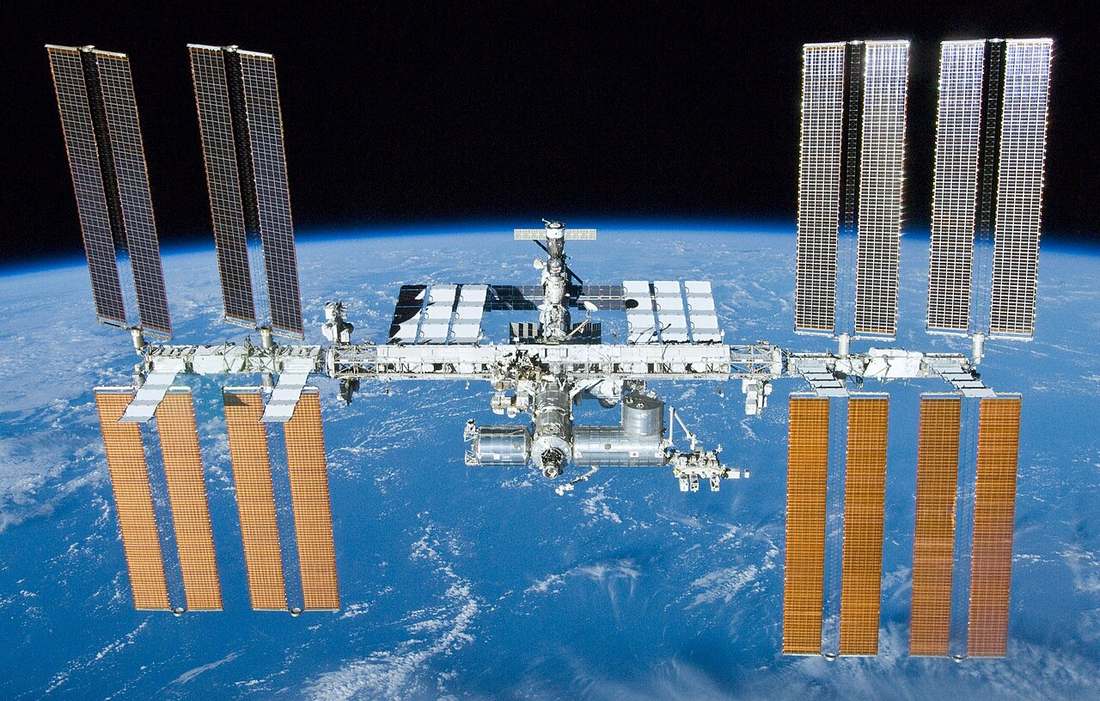
Space used to be a government monopoly with a government price tag: the Space Shuttle cost roughly $1.5 billion every time it flew. Today a private company launches most of the world's mass to orbit on rockets that land themselves and fly again, a seat to the edge of space sells like a luxury car, and the International Space Station is being readied for a controlled crash into the Pacific. This page explains how getting to space actually works now — the rockets, the stations, the Moon and Mars plans, the tourism, and the growing junk problem — with an honest line between what is real, what is planned, and what is merely promised. Checked November 21, 2026.
How getting to space works now
Every orbital rocket does the same basic job: accelerate a payload to about 7.8 kilometers per second — roughly 28,000 km/h — so that it falls around the Earth instead of into it. What changed is what happens to the rocket afterward. For most of the space age, rockets were thrown away after one flight, like building a new airliner for every trip. On December 21, 2015, SpaceX landed a Falcon 9 first stage upright on a landing pad, and reuse stopped being a stunt and became the business model: the booster flies back, lands on a pad or a drone ship, gets inspected and refueled, and flies again. Individual Falcon 9 boosters have now flown more than 20 times each, and the Falcon family launches well over 100 times a year — more than every other rocket in the world combined in most recent years. The economics followed: by CSIS estimates, putting a kilogram into low Earth orbit cost roughly $50,000 or more in the Shuttle era; on a Falcon 9 it is roughly $3,000. That tenfold-plus drop is why satellite constellations, commercial stations and space tourism exist at all. The newest machines push further — SpaceX's Starship is designed to reuse both stages, catching the booster with the launch tower itself (first achieved in October 2024), and spacecraft now dock themselves: Crew Dragon has flown fully autonomous rendezvous and docking with the space station since its first crewed flight in 2020, with onboard software — a practical, narrow use of artificial intelligence and automation — doing work that once required a pilot's hands.
The rockets, compared
| Rocket | Operator | Class | Reusable? | Status |
|---|---|---|---|---|
| Falcon 9 / Falcon Heavy | SpaceX | Medium / heavy lift | First stage yes; fairings recovered | The workhorse — crew, cargo, Starlink, national security |
| Starship | SpaceX | Super heavy lift | Designed for full reuse, both stages | Flight-test program since 2023; reached orbit and deployed operational satellites in 2026; no crew or customer service yet |
| New Glenn | Blue Origin | Heavy lift | First stage designed for reuse | Reached orbit on first flight, January 2025; early operations |
| Vulcan Centaur | ULA | Heavy lift | No (expendable) | First flight January 2024; flies US national security missions |
| Electron | Rocket Lab | Small lift | Booster recovery attempted by parachute | Operational since 2018; the leading dedicated small launcher |
| Ariane 6 | Arianespace (ESA) | Heavy lift | No (expendable) | First flight July 2024; Europe's institutional launcher |
Status as published by the operators, checked November 21, 2026. A Falcon 9 launch has been reported at about $67 million; SpaceX no longer posts a public price list, so treat that figure as reported, not quoted. Electron launches are reported at roughly $7–8 million. Starship reached orbit for the first time on September 28, 2026, and its ship was caught by the launch tower on November 14, 2026; it remains a test program, so any operational date is a target.
Who launches what
 SpaceX — the incumbent
SpaceX is no longer the insurgent; it is the default. Falcon 9 carries NASA astronauts to the space station (Crew Dragon, since 2020), cargo to the station, US military and intelligence satellites, commercial payloads, and SpaceX's own Starlink constellation — which is most of its launch manifest. The company's real product is cadence: when your booster lands and reflys, the marginal cost of the next launch collapses, and nobody else is close on flight rate. Starship is the bet on the next order of magnitude — a fully reusable super-heavy system meant to make orbit, the Moon and eventually Mars cheap. It is also, as of this writing, still a test program — though one crossing into early operations: the tower catch of a returning booster in October 2024 was a genuine first, Flight 14 in September 2026 was the first to reach orbit and deploy operational Starlink satellites, and in November 2026 the tower caught a returning ship for the first time. Real explosions along the way, and no crew or customer service yet. Both things are true at once, and any date attached to Starship operations should be read as a target, not a commitment.
 Blue Origin — the patient rival
Jeff Bezos's company took the slow road: years of suborbital New Shepard flights (which carry tourists and research payloads to the edge of space) before its orbital rocket, New Glenn, reached orbit on its first flight on January 16, 2025. New Glenn is a heavy-lift rocket with a reusable first stage designed to land on a ship downrange — Blue Origin's answer to Falcon Heavy. The company also builds the BE-4 engine that powers ULA's Vulcan, so it sells hardware even to a competitor, and it holds a NASA contract for a second crewed lunar lander (below). Blue Origin's honest status: a real orbital capability, a much thinner flight record than SpaceX, and a great deal riding on New Glenn's ramp-up.
 Rocket Lab — the small-launch specialist
Not every payload is a school bus. Rocket Lab's Electron — a small rocket that launches from New Zealand and Virginia — sells dedicated rides for small satellites that would otherwise wait in line for space on a big rocket. It has been flying orbital missions since 2018 and is the established leader in its class; the company also builds satellites and spacecraft components, not just rockets. Its next vehicle, Neutron, is a medium-lift rocket with a reusable first stage, aimed squarely at Falcon 9's market. Neutron's first-flight date has been given as a target in the mid-2020s; treat it as a plan, not a schedule.
ULA and Arianespace — the institutional launchers
United Launch Alliance — the Boeing–Lockheed Martin joint venture — flies Vulcan Centaur, an expendable heavy rocket that first flew in January 2024 and now carries US national security payloads. ULA does not compete on price or reuse; it competes on assurance, and the Pentagon pays for exactly that. Europe's equivalent is Arianespace's Ariane 6 (first flight July 2024), which exists so that European governments never have to ask another country for a ride to orbit. Neither is cheap, and neither pretends to be — strategic independence is the product. A newer wave of startups (Firefly, Relativity, Stoke and others) is chasing the same reusable economics as SpaceX at smaller scales; none has yet matched the incumbents' flight rates.
Satellites & constellations — the short version
Cheaper launches changed what satellites look like. Instead of a few large, exquisite spacecraft in high orbits, the industry now flies constellations: large numbers of mass-produced satellites in low Earth orbit, replaced continuously as they age out. SpaceX's Starlink is the largest example, providing broadband internet from orbit; Amazon's Leo constellation is being deployed as the main challenger, and older players (OneWeb, Iridium, Viasat, Hughesnet) run their own fleets for connectivity, television and messaging. The ground side matters as much as the space side — the stations that talk to these satellites are, in effect, specialized data centers with antennas, and our Data Centers page covers how that infrastructure works. This page stays on the industry that puts them up there.
Space stations: the ISS and what replaces it
The International Space Station is the largest structure humans have ever put in orbit — assembled piece by piece starting with the Russian Zarya module in November 1998, and continuously occupied since November 2, 2000. It is also old. NASA plans to operate it through 2030, then bring it down in a controlled deorbit in early 2031, targeting a remote stretch of the South Pacific around Point Nemo. SpaceX holds the contract (about $843 million, awarded June 2024) to build the US Deorbit Vehicle that will push it down. What replaces it is not one station but a market: under NASA's Commercial LEO Destinations program, private companies are building stations that NASA will rent space on rather than own. The named contenders are Axiom Space (modules that first attach to the ISS, then detach as a free-flying station), Vast (Haven-1, a single-module station), and Starlab (Voyager Space with Airbus). Their launch dates are targets, and every one has already slipped: as of late 2026, Vast's Haven-1 is targeting no earlier than the first quarter of 2027, Axiom's first module 2027 with a free-flying station around 2028, and Starlab 2028–2029 — none will carry crew before 2027, and NASA's next round of station funding awards is expected in spring 2027. A June 2026 GAO assessment put likely initial commercial capability at 2031, after the ISS retires — so a gap in US presence in orbit is a real planning case. China, meanwhile, operates its own station, Tiangong, completed in 2022. The honest summary: low Earth orbit is about to go from one government station to several commercial ones, if the business cases hold — research customers, tourists and film crews are the hoped-for revenue, and none of it is proven yet.
The Moon and Mars: real vs promised
The Moon — real hardware, slippery dates. NASA's Artemis program is the framework. Artemis I flew in late 2022: an uncrewed Orion capsule looped around the Moon and came home — done, verified, in the history books. Artemis II flew in April 2026: four astronauts — Reid Wiseman, Victor Glover, Christina Koch and Canada's Jeremy Hansen — looped around the Moon on a 10-day free-return flight without landing, the first crewed voyage to the Moon since Apollo. Artemis III is meant to land astronauts near the lunar south pole, targeted for 2027, using SpaceX's Starship as the lander (a contract worth about $2.9 billion, awarded 2021); Blue Origin holds a second lander contract (about $3.4 billion, 2023) for a later mission. The pattern to understand: every element of this — the SLS rocket, Orion, the landers, the spacesuits — has slipped at least once, and the landing date depends on Starship maturing from test vehicle to crewed lunar lander, which is a large unproven step. Robotic landers are further along: private companies have already reached the lunar surface under NASA's CLPS program, with mixed success — some landed and worked, some crashed. That, too, is the honest picture: the Moon is being re-entered commercially, imperfectly.
Mars — real robots, promised people. Robotically, Mars is well explored: NASA's Perseverance rover landed in February 2021 and is caching samples for a future return mission — a mission whose cost estimates ballooned past $11 billion and whose architecture NASA has been rethinking, with no settled design or date. Crewed Mars missions are a stated long-term goal of NASA's "Moon to Mars" architecture and a central promise of SpaceX's Starship program, but no agency or company has a funded, dated plan to land people on Mars. Elon Musk's Mars timelines have slipped repeatedly for a decade. The correct frame: Mars sample return is a real program in trouble; humans on Mars are an aspiration with hardware in development, not a schedule.
Space tourism: who flies and what it costs
| Experience | Operator | What you get | Price |
|---|---|---|---|
| Suborbital hop | Blue Origin (New Shepard) | ~11 minutes, a few minutes of weightlessness, past the Kármán line | Not published; reported from the high six figures up |
| Suborbital hop | Virgin Galactic | Air-launched spaceplane, similar profile | Seats $450,000–$600,000 (2021–2023); reported at $750,000 in 2026 |
| Orbital flight | SpaceX (Crew Dragon) | Days in orbit; Inspiration4 (2021) and Polaris Dawn (2024) flew all-civilian crews | Not published; tens of millions reported |
| Space station stay | Axiom Space via SpaceX | About 10 days aboard the ISS (Ax-1, 2022, was the first) | About $55 million per seat (reported, 2022) |
Prices are the operators' published figures where they exist, checked November 21, 2026; Blue Origin and SpaceX do not publish seat prices, so those entries are reported ranges, flagged as such. Virgin Galactic retired its Unity spaceplane in 2024; its first Delta-class ship, Apeiron, made its first captive-carry flight in October 2026, with commercial service targeted for early 2027.
The honest framing: suborbital tourism is a real, operating product — expensive, brief, and genuinely in space by the common definition (the 100 km Kármán line for Blue Origin; Virgin Galactic flies to about 85 km, which the US recognizes as space). Orbital tourism is real but rare and priced for billionaires. Neither is transportation; both are experiences. The prices will only fall if flight rates rise — the same reuse economics as cargo, applied to people, with far less tolerance for failure.
Space debris and traffic
Orbit is getting crowded, and the crowd includes the dead. Decades of launches have left spent rocket stages, defunct satellites and fragments from collisions and explosions circling the Earth at about 28,000 km/h, where even a paint fleck hits like a bullet. The US Space Force tracks the larger objects — tens of thousands of them, down to roughly the size of a softball — and warns operators when a collision looks possible; the International Space Station maneuvers out of the way several times a year, and constellation operators like SpaceX perform thousands of avoidance maneuvers. The deeper worry has a name: Kessler syndrome, described by NASA scientist Donald Kessler in 1978, in which collisions create fragments that cause more collisions, until an orbit band becomes unusable. We are not there, but the trend lines are why regulators have tightened the rules: the FCC's 2022 rule requires satellites in US-licensed orbits to deorbit within five years of mission end (down from the old 25-year guideline), and ESA's Zero Debris Charter (2023) commits signatories to debris-neutral operations by 2030. Active cleanup — grappling dead satellites and dragging them down — has been demonstrated experimentally but is not yet routine. The honest status: tracking and avoidance work; prevention rules are new; removal is still mostly a promise.
The agencies
 NASA
The anchor customer. NASA no longer builds most of the hardware it flies — it buys rides (SpaceX and Boeing crew vehicles, commercial cargo), rents future station space, and contracts lunar landers, while keeping the science, the deep-space missions and the Artemis architecture in-house. That shift, from operator to customer, is the single biggest structural change in the industry: it is why private launch companies have a business at all. NASA's budget is roughly $25 billion a year; a large share now flows to commercial providers.
 ESA — the European Space Agency
Europe's agency works differently: member states fund programs, industry builds the hardware, and Ariane 6 guarantees independent access to orbit. ESA flies science missions (its spacecraft have visited comets, Mars and the Sun), runs the Galileo navigation constellation with the EU, partners with NASA on Artemis (the Orion service module is European-built), and publishes the most-cited annual accounting of the debris environment. Other major agencies — Japan's JAXA, India's ISRO (which landed near the Moon's south pole in 2023), China's CNSA and Russia's Roscosmos — run their own launchers and programs, increasingly in two separate blocs: the US-led Artemis Accords partners and a China–Russia grouping.
Before you decide
- Dates are targets, not commitments. In space, a launch date more than a year out is an aspiration. Every program on this page has slipped at least once; plan your expectations accordingly.
- Reuse is the whole story. If a company cannot land and refly its hardware, its prices will not fall the way SpaceX's did. Ask of any new rocket: what comes back?
- "In space" has two definitions. The US recognizes 80 km; the international Kármán line is 100 km. Suborbital tourism straddles the difference — check which line a ticket actually crosses.
- Unpublished prices are a signal. Blue Origin and SpaceX do not post seat prices. Reported figures vary widely; anyone quoting you an exact number is guessing.
- Debris rules now have teeth. The five-year deorbit rule and zero-debris commitments are real constraints on new constellations — and a real cost line in their business plans.
What "best for" means — and what it doesn't
There is no single best rocket, station or ticket — only best fits for a job. Best for cheap, frequent access to orbit: Falcon 9, by an enormous margin of flight heritage. Best for assured national-security launch: Vulcan and Ariane 6, whose customers pay precisely for independence from commercial schedules. Best for a small satellite on its own schedule: Electron. Best for a first taste of space: a suborbital hop — minutes of weightlessness at luxury-car prices. Best for actually living in orbit: an Axiom ISS mission, at tens of millions per seat. And "best for" does not mean safest, soonest or cheapest in the abstract: the cheapest ride is the one flying most often, the most assured ride is rarely the cheapest, and every future date on this page is a plan that history says will move. Match the vehicle to the job, and read every timeline with skepticism.
Sources & further reading
Figures checked November 21, 2026, from the operators' and agencies' own publications: SpaceX Falcon 9 landing record (first booster landing December 21, 2015) and Starship flight-test reports (booster catch, October 13, 2024); CSIS Aerospace Security Project cost-per-kilogram estimates; Blue Origin New Glenn first flight (January 16, 2025); ULA Vulcan first flight (January 8, 2024); Arianespace Ariane 6 first flight (July 9, 2024); Rocket Lab Electron flight history (orbital since 2018); NASA Artemis I mission record (2022), Artemis II flight (launched April 1, 2026), HLS contract awards (SpaceX 2021, Blue Origin 2023), ISS transition plan (operations through 2030, deorbit 2031) and the US Deorbit Vehicle award (June 2024); Axiom Ax-1 (2022); Virgin Galactic published seat prices (2021–2023); ESA Space Environment Report and Zero Debris Charter (2023); FCC five-year deorbit rule (2022); Kessler & Cour-Palais (1978). Hero photo: NASA / Crew of STS-132, public domain, via Wikimedia Commons. SpaceX, Blue Origin, Rocket Lab, United Launch Alliance, Arianespace, NASA and ESA are trademarks or names of their respective owners; logos are shown for identification only. United Launch Alliance appears as text only — no usable logo file was available. Late-2026 status verified November 21, 2026: Artemis II launched April 1, 2026 (NASA); Starship Flights 14–15 (first orbital flight and operational satellite deployment, September 28, 2026; first ship catch, November 14, 2026 — SpaceX flight reports); commercial station targets (Vast Haven-1 NET Q1 2027; Axiom first module NET 2027; Starlab 2028–2029; GAO June 2026 assessment); Virgin Galactic Delta-class Apeiron captive-carry flight (October 28, 2026). Blue Origin and SpaceX seat prices are unpublished and shown as reported ranges.