
Wearables, Explained
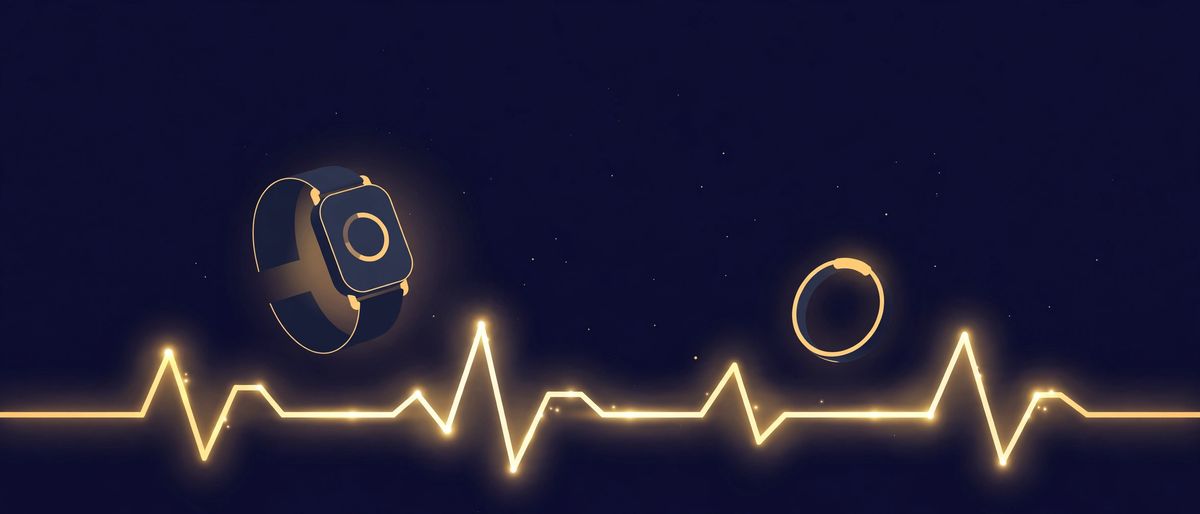
A smartwatch, a fitness tracker and a smart ring all measure the same body — but they disagree about what matters, and they disagree about what you pay for. The hardware is the cheap part: a Whoop costs nothing to buy and $199 a year forever, an Oura Ring costs $349 and then $5.99 a month for the app that makes it useful, and a Garmin costs $750 once and never asks again. This page covers the devices that are actually worth buying in late 2026 — Apple Watch, Samsung Galaxy Watch, Ring and Fit3, Garmin, Google Pixel Watch and Fitbit, Oura and Whoop — with prices, battery life, the sensors that matter, and the three-year cost. The apps and services around them live on our companion Digital Health & Fitness page. Checked November 11, 2026.
How it works, in one paragraph
Nearly every wearable measures your body the same way: an optical sensor (PPG) shines green and red light into your skin and reads the blood pulsing underneath, which gives heart rate, heart-rate variability (HRV), blood oxygen and sleep. An electrical sensor adds ECG — a real heart trace, not an estimate — and a temperature sensor watches overnight changes. An accelerometer and GPS track movement and routes. Everything above that — sleep stages, a Readiness score, a Strain score, a sleep score — is an algorithm interpreting those few signals, not a measurement. That is why two devices on the same wrist can disagree about your night: they measured the same signals and interpreted them differently. None of these devices is a medical device, and none of them diagnoses anything. What they are good at is trends over weeks: a resting heart rate creeping up, sleep getting shorter, recovery falling after hard training. The buying decision is really three decisions: which phone you own (Apple Watch needs an iPhone; Galaxy Watch, Galaxy Ring, Galaxy Fit3 and Pixel Watch need Android), whether you will wear it to bed (a ring beats a watch here), and whether you will pay a subscription — because that, not the sticker price, is the real cost.
The comparison — smartwatches
| Watch | Price | Battery (maker's rating) | Key sensors | Subscription | Best for |
|---|---|---|---|---|---|
| Apple Watch Series 12 | From $399 | Up to 24h (38h low power) | ECG, blood oxygen, temperature, hypertension notifications, Readiness score | None required | Best all-round smartwatch (iPhone) |
| Apple Watch Ultra 4 | From $799 | Up to 50h (84h low power) | Same health sensors as Series 12 + dual-frequency GPS, satellite messaging | None required | Outdoors and endurance (iPhone) |
| Apple Watch SE 3 | $249 | Up to 18h (32h low power) | Heart rate, sleep, fall detection — no ECG or blood oxygen | None required | Cheapest Apple Watch |
| Samsung Galaxy Watch 8 | From $299.99 | Up to 30h rated; ~24h real-world with always-on display | BioActive sensor (heart rate, blood oxygen, blood pressure*), temperature, sleep | None | Best Android smartwatch |
| Samsung Galaxy Watch Ultra | $649.99 | Longest in Samsung's lineup | Same BioActive sensor, titanium, rugged | None | Rugged Android watch |
| Garmin Forerunner 970 | $749.99 | Up to 15 days; 26h GPS | ECG, maps, flashlight, running metrics | None | Serious runners and triathletes |
| Garmin Fenix 8 | From $999.99 | Up to 29 days (51mm AMOLED); 47mm up to 16 days | ECG, maps, multi-band GPS, dive-rated 40m | None | Multi-day outdoors |
| Garmin Venu 4 | From $549.99 | Up to 12 days (45mm) | ECG, temperature, speaker and mic, flashlight | None | Everyday Garmin |
| Garmin vívoactive 6 | $299.99 | Up to 11 days | Heart rate, sleep, GPS | None | Budget Garmin |
| Google Pixel Watch 5 | From $399.99 | 30–40 hours | Heart rate, HRV, blood oxygen, temperature, sleep score | Google Health Premium optional ($9.99/mo) | Android + Google services |
| Fitbit Charge 6 | $159.95 | Up to 7 days | Heart rate, GPS, sleep score, Smart Wake | Google Health Premium optional ($9.99/mo) | Cheapest tracker with GPS and iPhone support |
*Samsung's blood-pressure feature needs calibration with a cuff and is region-dependent — it is an estimate, not a reading. Prices are US list prices from the makers' own stores and October–November 2026 roundups, checked November 11, 2026 — confirm before buying. Battery figures are the makers' maximum ratings, not guarantees.
The comparison — rings and bands
| Device | Price | Battery | What it tracks | Subscription | Best for |
|---|---|---|---|---|---|
| Oura Ring 5 | From $399 | 6–9 days | Sleep stages, HRV, temperature, blood oxygen, Readiness | $5.99/mo or $69.99/yr (first month free) | Best sleep and recovery ring |
| Oura Ring 4 | From $349 | 5–8 days | Same sensors as Ring 5, slightly larger | $5.99/mo or $69.99/yr (first month free) | Cheaper Oura, same app |
| Samsung Galaxy Ring | $399.99 list | Up to 7 days | Sleep, heart rate, temperature, Energy Score | None | Best ring for Galaxy phones |
| Samsung Galaxy Fit3 | $59.99 | Up to 13 days rated; ~7–10 days real-world | Heart rate, blood oxygen, sleep, 100+ workouts | None | Cheapest tracker for Android |
| Whoop 5.0 | No hardware price | 14+ days | Sleep, Recovery, Strain, HRV, VO2 max | One $199/yr, Peak $239/yr | Hard trainers who want coaching |
| Whoop MG | No hardware price | 14+ days | As 5.0 + ECG, AFib detection, blood-pressure insights | Life $359/yr | Heart-health tracking |
The subscription catch — what it costs over three years
This is the table that matters. Garmin, Apple and Samsung sell you hardware once. Oura, Whoop and Google rent you the analysis — and the rent is the larger share of what you pay.
| Device | Hardware | 3-year subscription | 3-year total |
|---|---|---|---|
| Apple Watch Series 12 | $399 | $0 | $399 |
| Apple Watch Ultra 4 | $799 | $0 | $799 |
| Samsung Galaxy Watch 8 | ~$300 | $0 | ~$300 |
| Samsung Galaxy Ring | $399.99 | $0 | $399.99 |
| Samsung Galaxy Fit3 | $59.99 | $0 | $59.99 |
| Garmin Forerunner 970 | $749.99 | $0 | $749.99 |
| Garmin Fenix 8 | From $999.99 | $0 | From $999.99 |
| Google Pixel Watch 5 | $399.99 | $0 — or ~$270 with Google Health Premium | $399.99 (or ~$670) |
| Fitbit Charge 6 | $159.95 | $0 — or ~$270 with Google Health Premium | $159.95 (or ~$430) |
| Oura Ring 4 | $349 | ~$210 (35 billed months at $5.99) | ~$559 |
| Whoop One (5.0) | $0 | $597 ($199 × 3) | $597 |
The pattern: a Whoop costs more over three years than an Apple Watch Series 12, and you own nothing at the end of it — stop paying and the band stops working. An Oura Ring costs $349 on the box and about $559 over three years, and without the membership the app falls back to basic daily figures while the sleep stages, trends and readiness that justify the purchase are locked. Google's premium is optional, which is the honest difference: the Pixel Watch and the Charge 6 work fully without it, and the $9.99 a month buys coaching and deeper insights, not the device itself.
 Apple Watch — the default, and the new generation
Apple replaced its whole lineup on September 18, 2026. The Series 12 starts at $399 (42mm GPS; $499 with cellular) and the Ultra 4 starts at $799 (49mm titanium, cellular only). Both share the same new Health Sensing System — heart rate measured every five seconds, HRV sampled far more often than before — and the same Readiness score, 0 to 10, built from recent activity, training load, vitals and sleep, with four plain-language recommendations: Recover, Pace Yourself, Ready, Go For It. The score needs seven nights of sleep data before it appears, and it only runs on these two watches — a Series 11 will not get it from a software update. The extra $400 for the Ultra 4 buys battery life (up to 50 hours, 84 in Low Power Mode, against the Series 12's 24 and 38), GPS (dual-frequency against single-band), satellite messaging, 100m water resistance and a brighter display — not extra health sensing. The SE 3 is $249 and covers the basics with up to 18 hours of battery, but it has no ECG, no blood oxygen and no hypertension notifications. The previous generation — Series 11 and Ultra 3, launched September 19, 2025 at the same $399 and $799 — is still sold and often discounted; the Series 11 has the same 24-hour battery and ECG, but no Readiness score. Apple Watch needs an iPhone, and no subscription is required for any health feature — Fitness+ is optional.
Hypertension notifications are not blood-pressure readings. The Series 12, Ultra 4, Series 11 and Ultra 3 use optical heart-sensor data and an algorithm that reviews patterns over 30-day periods to flag possible signs of chronic high blood pressure. It is a screening notification, not a measurement, and it does not replace a cuff-based reading or a medical diagnosis. Apple claimed no new regulatory clearance for anything it announced in September 2026, and its claim of the most accurate heart rate across leading wearables comes from an Apple-run study of over 1,000 participants — treat it as a strong claim awaiting independent replication, not settled fact.
 Samsung Galaxy Watch 8 and Galaxy Ring — the Android default
The Galaxy Watch 8 launched in July 2025 and is the default Android smartwatch: a 3,000-nit display, Gemini on the wrist, a BioActive sensor covering heart rate, blood oxygen and temperature, plus an antioxidant index, vascular load and a Running Coach. The honest flag is the price, which has moved since launch: it started at $349.99 for the 40mm model, and Samsung's own store now lists it from $299.99 (40mm Bluetooth; $329.99 for 44mm, LTE adds $50). The other honest flag is battery: Samsung rates both sizes at up to 30 hours, but independent testing found about 24 hours with the always-on display — this is a watch you charge every day. The Galaxy Watch Ultra is $649.99, titanium and rugged, with the longest battery in Samsung's lineup. The Galaxy Ring is $399.99 list (Samsung's US site listed it from $299.99 in October 2026 — flag the gap), a 2.3–3.0g titanium ring with up to 7 days of battery (6 days on sizes 5–11), a charging case good for about two recharges, and no subscription — the subscription-free answer to Oura. The catch is compatibility: it works with Android only, and its best features (Energy Score, Galaxy artificial intelligence (AI) tips, Find My Ring) need a Galaxy phone. A Galaxy Ring 2 is confirmed and reportedly due in early 2027. The Galaxy Fit3 is $59.99, the cheapest way into Samsung Health: a 1.6-inch AMOLED band at 18.5g, up to 13 days of battery on Samsung's rating (about 7–10 days in independent testing, around 5 with the always-on display), heart rate, blood oxygen, sleep and 100+ workout modes, and no subscription. The catches are no built-in GPS — outdoor runs borrow your phone's signal — no tap-to-pay, and Android only.
 Garmin — buy once, charge rarely
Garmin is the only brand here that sells hardware once and never asks again — no subscription, no paywalled scores — and its battery life is measured in days and weeks, not hours. The Forerunner 970 is $749.99, the flagship running watch: up to 15 days in smartwatch mode, 26 hours of GPS, full offline maps, ECG, a flashlight and a titanium build. The Fenix 8 starts at $999.99, the rugged multisport watch: dive-rated to 40m, maps, multi-band GPS, and up to 29 days on the 51mm AMOLED model — note that the 29-day figure belongs to the largest size only; the 47mm AMOLED is rated up to 16 days. The Venu 4 starts at $549.99 and is Garmin's closest thing to an Apple Watch: AMOLED, ECG, a speaker and microphone, a flashlight, and up to 12 days on the 45mm model. The vívoactive 6 is $299.99 with up to 11 days. All of them work with iPhone and Android. What you give up against Apple and Samsung: no cellular calls on most models, a plainer app store, and no voice assistant as polished as Siri or Gemini. What you get: the deepest training metrics in the category, and a watch that stays on your wrist through a week of sleep.
 Google Pixel Watch 5 and Fitbit — one health app, three prices
Google now sells three wearables around one health app. The Pixel Watch 5 starts at $399.99 (41mm; $429.99 for 45mm), launched September 2026: Gemini, Wallet, calls and Fitbit health tracking built in, with 30–40 hours of battery — it wants a charger most nights. It needs an Android phone; it does not pair with an iPhone. The Fitbit Charge 6 is $159.95, a slim band with a screen, built-in GPS and up to 7 days per charge — the best value tracker on this page, though it is a 2023 model and its Daily Readiness Score needs the paid tier. The new Fitbit Edge is $179.99 (ships October 27, 2026): a 1.34-inch screen, GPS, ECG and up to a week of battery, and it pairs with an iPhone — the first new Fitbit in years. The screenless Fitbit Air is $99. The paid tier changed names in May 2026: Fitbit Premium is now Google Health Premium, $9.99 a month or $99 a year, with a three-month trial on new devices. It adds the Gemini-powered Google Health Coach, deeper sleep insights and guided programs. Core tracking — heart rate, HRV, blood oxygen, sleep stages and the sleep score — is free, which is the honest difference from Oura and Whoop.
Oura Ring — the best sleep tracker, rented monthly
Oura is the default answer for sleep and recovery without a screen on your wrist. The Ring 5 launched in May 2026 from $399 (Silver or Black; $499 in other finishes): about 21% thinner and 23% narrower than the Ring 4, the same sensors, 6–9 days of battery. The Ring 4 is still sold from $349 (premium finishes $399–$499) with 5–8 days of battery, and it gets the same new software as the Ring 5 — often the better value, and frequently discounted. Both build three daily scores — Sleep, Readiness and Activity — from sleep stages, resting heart rate, HRV, temperature trends and blood-oxygen variation, and independent testing has found the Ring 4's overnight HRV among the most accurate of the wearables tested. The catch is unchanged: a $5.99-a-month membership (or $69.99 a year, first month free) unlocks the full app, and without it the ring still records but most of the depth is locked. Two more things to know before buying: Oura rings cannot be resized — a different size is a new ring at full price, so use the sizing kit — and a ring has no GPS and no screen, so it cannot pace a run or show the time.
 Whoop — you subscribe, you don't buy
Whoop is the opposite of every other device on this page: there is no hardware price at all. You subscribe, and the band comes with the membership — One at $199 a year (Whoop 5.0), Peak at $239 a year (adds the wireless PowerPack and a SuperKnit band), Life at $359 a year (ships with the Whoop MG, which adds ECG, AFib detection and blood-pressure insights). New members start on an annual commitment; there is no monthly sign-up. The band is screenless, charges on the wrist with the PowerPack, and lasts 14+ days per charge. Everything lives in the app as three scores: Sleep, Recovery and Strain — Strain is a 0-to-21 measure of cardiovascular load built from time in heart-rate zones, so a 90-minute easy run and a 25-minute interval session can land near the same number while doing different things to your legs. Whoop is at its best on someone who trains hard and wants a coach that says when to push and when to rest. The honest flags: it has no GPS and no screen, so as a running device it depends entirely on your phone or another watch; and stop paying and the band stops working — three years on the cheapest tier is $597, and you own nothing at the end of it.
The sensors that matter
- ECG — a real electrical heart trace, cleared as a health feature. On Apple Watch (Series 12, Ultra 4, Series 11, Ultra 3), Garmin (Forerunner 970, Fenix 8, Venu 4), Fitbit Edge and Whoop MG. It checks for signs of atrial fibrillation; it does not replace a doctor.
- Blood oxygen (SpO2) — on nearly every device here, read from the wrist or finger. Useful for spotting overnight dips and altitude effects; availability varies by country and regulation on Apple Watch, so check the exact model you plan to buy.
- Sleep — every device tracks it, and every device is only moderately accurate at light, deep and REM staging. What trackers are good at is when and how long you slept, and whether that is changing. If sleep is the metric you actually want and you will not reliably wear a watch to bed, a ring is the honest pick — comfort drives compliance, and compliance is what produces data.
- Temperature — overnight skin-temperature trends, on Apple Watch, Oura, Samsung, Garmin Venu 4 and Pixel Watch 5. Most useful as a deviation from your own baseline — a fever, an illness coming on, a cycle shift — not as a thermometer reading.
- Blood pressure — nobody on this page measures it properly yet. Samsung's watch estimates it after cuff calibration (region-dependent). Whoop MG offers blood-pressure insights on the top tier, still in beta. Apple's hypertension notifications flag possible chronic high blood pressure from 30-day patterns — they are not readings. If blood pressure matters to you, buy a cuff; our Digital Health & Fitness page covers connected cuffs.
Before you decide
- Check your phone first. Apple Watch needs an iPhone. Galaxy Watch, Galaxy Ring, Galaxy Fit3 and Pixel Watch need Android. Garmin, Oura, Whoop and the Fitbit Edge work with both.
- Do the three-year math. The subscription, not the sticker price, is the cost — a Whoop costs $597 over three years and you own nothing; an Oura Ring costs about $559; a Garmin costs its sticker price and nothing more.
- Decide whether you will wear it to bed. Sleep data is the single most useful thing a wearable measures, and it only exists if the device is on your wrist or finger overnight. If a watch bothers you at night, buy a ring.
- Charge it where you sleep, or don't buy it. A watch with 24 hours of battery needs a daily charge — usually while you shower. A Garmin or a ring goes a week or two, which is why their sleep data is more complete.
- Use the sizing kit. Rings cannot be resized, and a ring that is too loose reads badly while a ring that is too tight swells on. Oura and Samsung both sell or recommend one; wear it for a day before ordering.
- Remember what the scores are. Sleep stages, Readiness, Strain and recovery scores are algorithms interpreting a few signals — useful for trends over weeks, not verdicts on a single night. And none of these devices is a medical device: a worrying reading means call a doctor, not the app.
What "best for" means
There is no single best wearable — the right one depends on your phone, your wrist and your tolerance for a monthly bill. "Best for" is the use case each one wins: Apple Watch Series 12 for the best all-round smartwatch if you own an iPhone, Ultra 4 for outdoors and endurance, Garmin Forerunner 970 for serious runners, Fenix 8 for multi-day adventures, Venu 4 for an everyday Garmin, Galaxy Watch 8 for Android, Pixel Watch 5 for Google services, Fitbit Charge 6 for the cheapest tracker worth buying with built-in GPS and iPhone support, Galaxy Fit3 for the cheapest tracker of all if you own an Android phone and can live without built-in GPS, Oura Ring for sleep and recovery without a screen, Whoop for hard trainers who want a coach and accept the subscription, Galaxy Ring for Samsung phone owners who refuse to pay one. Compare on the three-year total, not the sticker price — and buy the one you will actually wear to bed.
Sources & further reading
Prices and figures checked November 11, 2026, from the makers' own stores and October–November 2026 roundups: Apple's September 9, 2026 Series 12 and Ultra 4 announcement and Apple Support readiness documentation; Samsung's Galaxy Watch 8, Galaxy Ring and Galaxy Fit3 listings; Garmin's US store (Forerunner 970, Fenix 8, Venu 4, vívoactive 6); Google's Pixel Watch 5 and Fitbit listings and the May 19, 2026 Google Health Premium rename; Oura's Ring 4 and Ring 5 listings and membership pricing; Whoop's membership tiers; and independent checks from GSMArena battery testing, Tom's Guide, TechRadar Galaxy Fit3 battery testing, and October 2026 price roundups. Galaxy Fit3 figures checked November 16, 2026. Flagged on this page: the Galaxy Watch 8 price has fallen since its $349.99 launch (Samsung's store now lists it from $299.99); the Galaxy Ring list is $399.99 while Samsung's US site listed it from $299.99 in October 2026; the Fenix 8's 29-day battery figure belongs to the 51mm AMOLED model only; Apple's heart-rate accuracy claim comes from an Apple-run study and awaits independent replication. Apple, Samsung, Garmin, Google, Fitbit, Oura and Whoop are trademarks of their respective owners; logos are shown for identification only. Oura appears as text only — its logo file renders white-on-black and was not usable.