
Humanoid Robots, Explained

A humanoid robot is a machine shaped like a person — two legs, two arms, hands, a head full of sensors — with artificial intelligence deciding what to do next. In late 2026 they are everywhere in the news and almost nowhere in real life. The honest way to judge them is by stage, not by demo video: a polished clip of a robot folding laundry says almost nothing about whether you can buy one, or whether it can do the job unsupervised. This page covers the credible robots, what each one is actually doing today, and what it costs — where a price is published at all. Checked November 12, 2026.
What a humanoid robot actually is
Three things have to come together. The body — motors at the joints (actuators), a battery, and a balance system that keeps a tall, heavy machine upright while it walks. The hands — the hardest part of the whole machine, because a human hand has more than twenty degrees of freedom and a robot hand needs to grip a box, a tool, or a cup without crushing it or dropping it. And the brain — cameras and sensors feeding a vision-language-action model, the kind of artificial intelligence that turns "pick up that tote and put it on the shelf" into a sequence of movements. Our What Is AI? page explains how those models work.
What it isn't — yet. No humanoid robot reads minds, understands your home the way you do, or does general housework. No robot on this page can walk into an unfamiliar kitchen and cook dinner, clean a bathroom, or look after a child. The robots that work today do narrow, repetitive jobs in controlled places — moving totes in a warehouse, sequencing parts on a factory line — and many of them still get help from a human operator watching remotely. A humanoid is a body for artificial intelligence, not a replacement person.
Wheels instead of legs. Not every robot on this page walks. Two of them — Apptronik's Apollo 2 and Sanctuary's Phoenix Gen 8 — also come in wheeled versions, and the choice is deliberate: wheels are cheaper, more stable and use less battery than legs, and a factory floor is flat. The trade-off is that a wheeled robot can't climb stairs or work in spaces built for human legs. Legs are for human-shaped spaces; wheels are for flat ones. That is why some makers offer both — legs where the space demands them, wheels where it doesn't.
The four stages — read the stage, not the demo
Every humanoid on this page sits in one of four stages. The stage is the fact that matters; the demo video is the marketing.
| Stage | What it means | The test |
|---|---|---|
| R&D | No product for sale. Research hardware, one-off builds, lab demonstrations. | Could you order one? No. |
| Prototype | Working hardware demonstrated, not sold. Internal testing and showpieces. | Could you order one? No — the maker uses it themselves. |
| Pilot | Units operating at customer sites under trial, doing real work under supervision. | Could you order one? Not yet — but someone else's factory is running it. |
| Commercial | Available to order and ship, at a published price, to anyone who can pay. | Could you order one? Yes, today. |
Pre-order is not a fifth stage. A robot taking deposits is still a prototype or a pilot underneath — the deposit buys a place in a queue, not a working machine. Two robots on this page are in pre-order, and both are flagged as such. And the demo trap is real: some demonstrations are teleoperated — a human driving the robot from elsewhere — or edited, or filmed in a room the robot was trained on for weeks. A backflip is a stunt; a robot that moves ten thousand totes a day without dropping one is a product. Judge the deployment, not the clip.
Where things actually stand
Fourteen robots from the companies with real hardware, real customers, or real prices — not the full directory of tracked companies, which runs to more than fifty, most of them prototypes. Prices are US list prices from the makers' own stores where published; most enterprise robots have no public price at all, and that absence is itself a signal — if you have to ask, you are buying a pilot agreement, not a product.
| Company | Robot | Stage | Size & payload | What it is actually doing today | Price |
|---|---|---|---|---|---|
| Tesla | Optimus Gen 3 | Prototype | 173 cm, 57 kg, 20 kg carry | Internal deployment in Tesla factories; showpiece in Tesla showrooms | No list price; $20,000–$30,000 target at volume |
| Figure | Figure 03 | Pilot | 173 cm, 61 kg, 20 kg payload, ~5 hr | Sequencing parts at BMW's Spartanburg plant (pilot — no robot count published) | No public price; ~$20,000 long-run consumer target reported |
| Boston Dynamics | Atlas (electric) | Pilot | 190 cm, 90 kg, up to 50 kg instant payload, 4 hr | 2026 units committed to Hyundai's Georgia plant and Google DeepMind | No price announced |
| 1X | NEO | Pre-order | 168 cm, 30 kg, lifts 70 kg, ~4 hr | No confirmed customer deliveries yet; complex tasks routed to remote human operators | $20,000 Early Access + $200 deposit; $499/mo subscription |
| Unitree | G1 | Commercial | 132 cm, ~35 kg, 2 kg per arm, ~2 hr | Sold for research and education; the cheapest full-size humanoid you can buy | $13,500 direct; $17,990 via US reseller |
| Unitree | H2 | Commercial | 182 cm, ~70 kg, 7 kg payload (21 kg peak), ~3 hr | Sold in China and internationally; performed at the 2026 Spring Festival Gala | $29,900 China / $40,900 international / $68,900 EDU |
| Apptronik | Apollo | Pilot | 173 cm, 72.6 kg, 25 kg payload, 4 hr | Pilots at Mercedes-Benz factories, GXO Logistics and Jabil | No public price |
| Agility Robotics | Digit | Commercial | 175 cm, ~65 kg, 16 kg payload, up to 4 hr | 75 units at Amazon's Spanaway warehouse; 100,000+ totes moved at GXO — the most commercially deployed humanoid | ~$250,000 or $2,000–$4,000/mo RaaS (reported, not a list price) |
| UBTECH | Walker S2 | Commercial | ~176 cm, 15 kg payload, 3-min battery swap | Mass production since Nov 2025; customers include BYD, Geely, Foxconn and Airbus | No public price; enterprise contracts only |
| Sanctuary AI | Phoenix Gen 8 | Pilot | 170 cm, ~70 kg, 25 kg payload | Research platform; since June 2026 the commercial product is its Carbon AI software on other makers' hardware | No price; never sold as a complete robot |
| EngineAI | T800 | Commercial (China) | 173 cm, 75–85 kg, 25–46 DoF | Sold in China; no named customer deployment and no independent verification | ¥180,000–¥360,000 / $40,500–$80,800 (two different price lists — flagged) |
| XPeng | Iron | Pilot | 178 cm, 70 kg, 20 kg payload, ~5 hr | Production line commissioned Sep 2026; first unit walked off the line; external deliveries targeted 2027 | No price announced |
| Noetix | N2 | Commercial | 118 cm, 30 kg, up to 3.5 m/s, 1–2 hr | Sold for research, education and demos; ran a half-marathon and does backflips | ¥39,900 (~$5,500) in China; $15,390–$15,416 via US reseller |
| NEURA Robotics | 4NE1 Gen 3.5 / Gen 4 | Pre-order | 180 cm, 80 kg, 10–20 kg payload, 6–8 hr | No customer deployments or named pilots; Gen 4 training at a €17M robot gym in Munich | Gen 3.5: €98,000 (1–19 units) / €60,000 (20+); Mini €19,999 |
Figures are the makers' own published specifications and announcements, checked November 12, 2026. Where sources conflict or a figure is unverified, the page says so in the text below. Roadmaps and targets are the companies' stated plans, not independently established predictions.
The robots, one by one
 Tesla Optimus — the most famous prototype
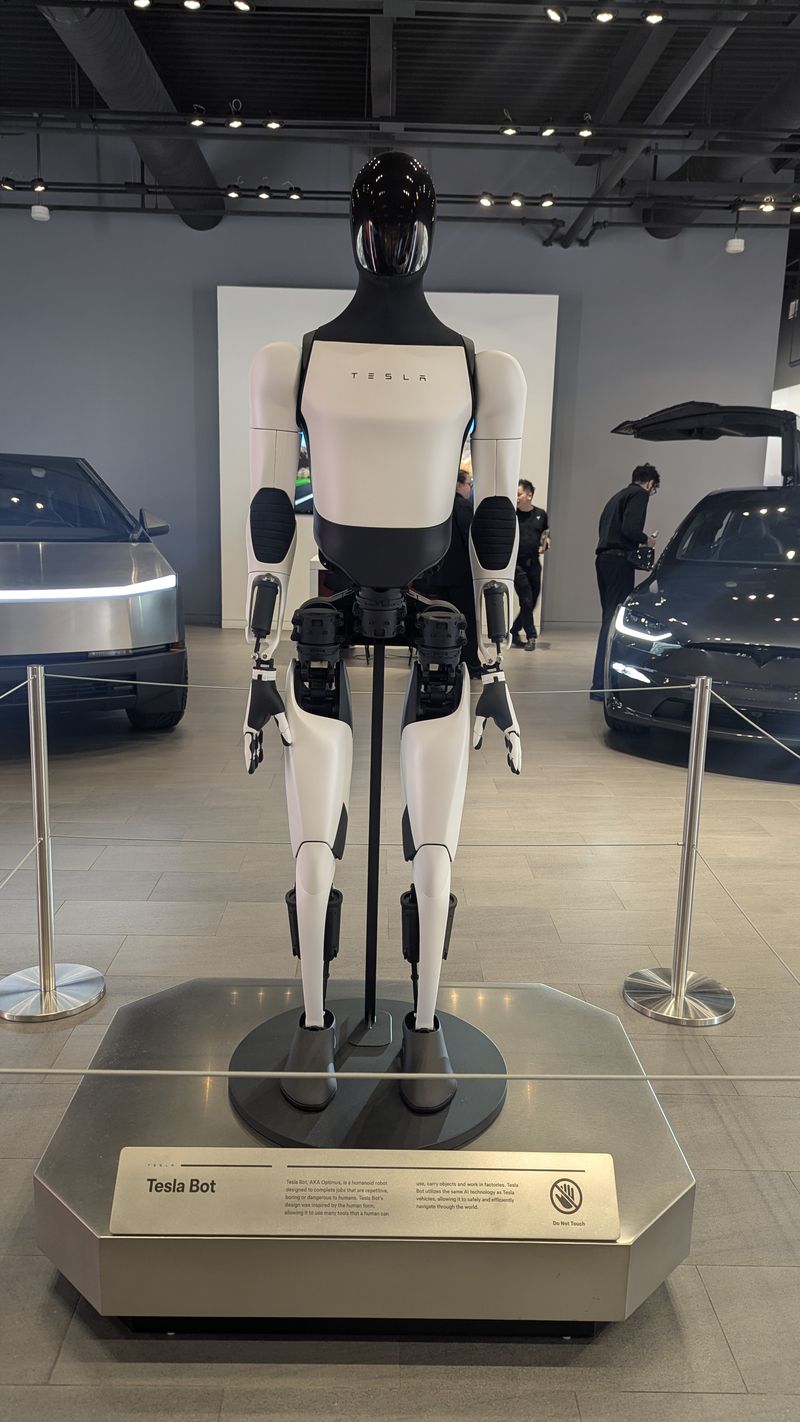
Optimus is the robot most people have seen, and the furthest from a product you can buy. The third generation stands 173 cm tall, weighs 57 kg, carries a 20 kg payload and has 22-degree-of-freedom hands — the dexterous hands are the real advance over earlier versions. Tesla's stated target price is $20,000–$30,000 at volume, but that is a target, not a list price: there is no public spec sheet and no confirmed consumer sale date. Mass production was reported to have started in January 2026 at Tesla's Fremont plant at a claimed rate of about 1,000 units a week, with the units going to Tesla's own factories and an Optimus training facility — not to customers. External sales are expected in 2026–2027 at the earliest, and some analysts put them at 2028–2029. Flagged: reported runtime figures conflict — about 5 hours per some sources, 8–12 hours per others. And some of the most impressive demonstrations used teleoperation, a human driving the robot remotely.
Figure 03 — the factory pilot that works
Figure 03, launched October 9, 2025, is the clearest example of a humanoid doing a real job. It stands 173 cm (the manufacturer's figure — pre-launch reporting said 168 cm), weighs 61 kg, carries a 20 kg payload, runs about 5 hours per charge and moves at 1.2 m/s, powered by Figure's Helix artificial intelligence. At BMW's Spartanburg plant, Figure 03 units work in Hall 52 sequencing parts for the production line — a deployment BMW announced in June 2026. BMW has not published a robot count: its own account to Forbes described one robot working at a time, with a second on standby during charging, in a non-production test involving two or three machines. That followed a roughly ten-month pilot with the earlier Figure 02 in the body shop, inserting sheet-metal parts for welding; Figure claims the robots supported production of more than 30,000 X3 vehicles over that period. Figure's BotQ factory in San Jose built its 1,000th unit in July 2026, at a demonstrated rate of about one robot per hour. There is no public price — a long-run consumer target of about $20,000 has been reported — and a distribution-center agreement with Catalyst Brands in Reno, signed in May 2026, extends the pilot footprint. Flagged: some sources describe the BMW deployment as "paid commercial" — it is a contract fleet at one customer, not a product you can buy, so this page keeps it at Pilot.
 Boston Dynamics Atlas — the research legend, now electric
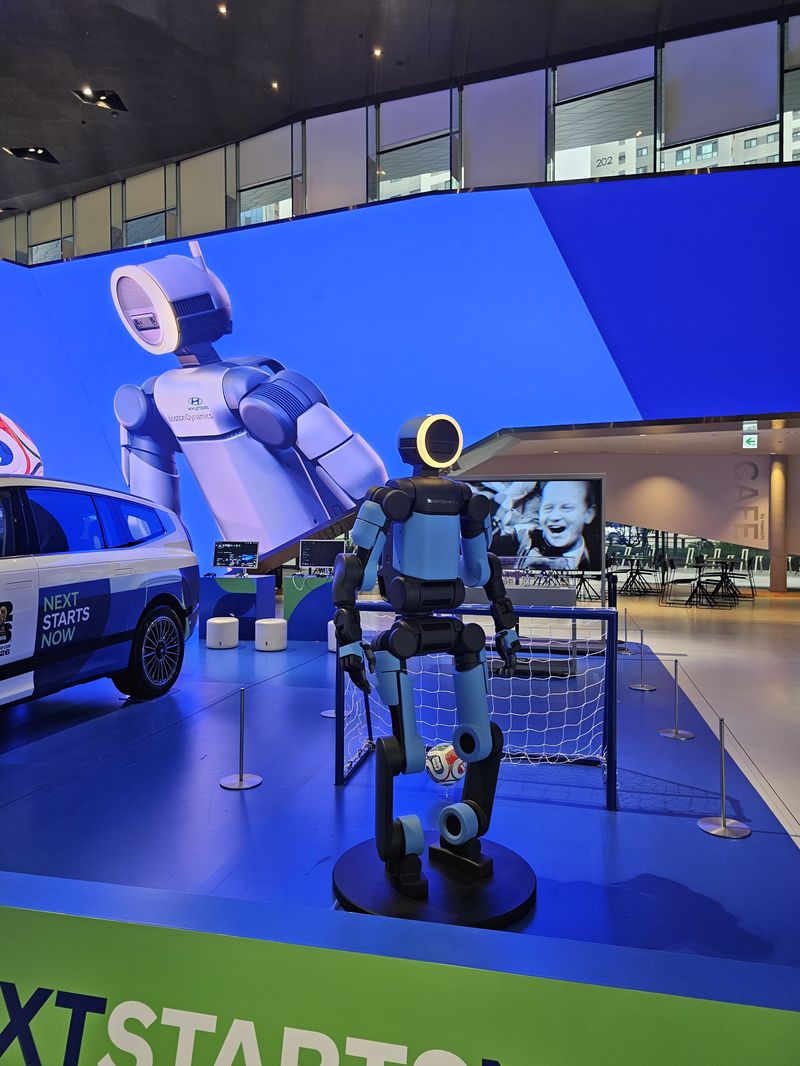
Atlas has been the benchmark for humanoid movement for a decade — the backflips and parkour videos were the hydraulic version, retired in 2024. The electric Atlas, unveiled as a product at CES in January 2026, is a different machine: 190 cm tall, 90 kg, 56 degrees of freedom, a 2.3 m reach, a 50 kg instant payload (30 kg sustained, 20 kg one-handed), IP67 sealing, a 4-hour battery (2 hours under heavy lifting) and a 3-minute autonomous battery swap. The GR3 hand, unveiled October 1, 2026, adds four fingers, 13 degrees of freedom and tactile sensing. Boston Dynamics is owned by Hyundai Motor Group (since 2021) and works with Google DeepMind on Gemini Robotics. Every 2026 unit is committed to Hyundai's Robotics Metaplant Application Center in Savannah, Georgia (opened September 21, 2026) and to Google DeepMind; more customers are expected from early 2027, and Hyundai plans more than 25,000 units across its plants from 2028. No price has been announced. Flagged: the CES 2026 stage demonstration was remotely piloted, per the Associated Press — a reminder that a stage demo is not autonomy.
 1X NEO — the only home bet, and the most honest test of teleoperation
NEO is the one robot on this page aimed at your home rather than a factory. Pre-orders opened October 28, 2025: Early Access costs $20,000 plus a $200 refundable deposit, with a 3-year warranty, and a $499-per-month subscription (six-month minimum, per the Wall Street Journal). The robot stands 168 cm, weighs just 30 kg, lifts 70 kg and carries 25 kg, runs about 4 hours on an 842 Wh battery, has 22-degree-of-freedom hands, and runs on an Nvidia Jetson Thor chip with 1X's Redwood artificial intelligence. US deliveries were promised to start in 2026, but no confirmed first customer delivery had been reported as of October 13, 2026, and 1X's claim of about 10,000 pre-orders is unaudited (the deposits are refundable). The honest flag is the big one: NEO is not fully autonomous yet — complex tasks are routed through remote human operators in what 1X calls Expert Mode, and hands-on testing by the Wall Street Journal found the robot primarily teleoperated. 1X does give owners privacy controls: owner-approved areas, no-go zones, and approve-or-deny for each remote session. If a home robot ever works, it will look something like this — but today you are buying a pre-order for a robot that still needs a human in the loop.
 Unitree G1 and H2 — the ones you can actually buy
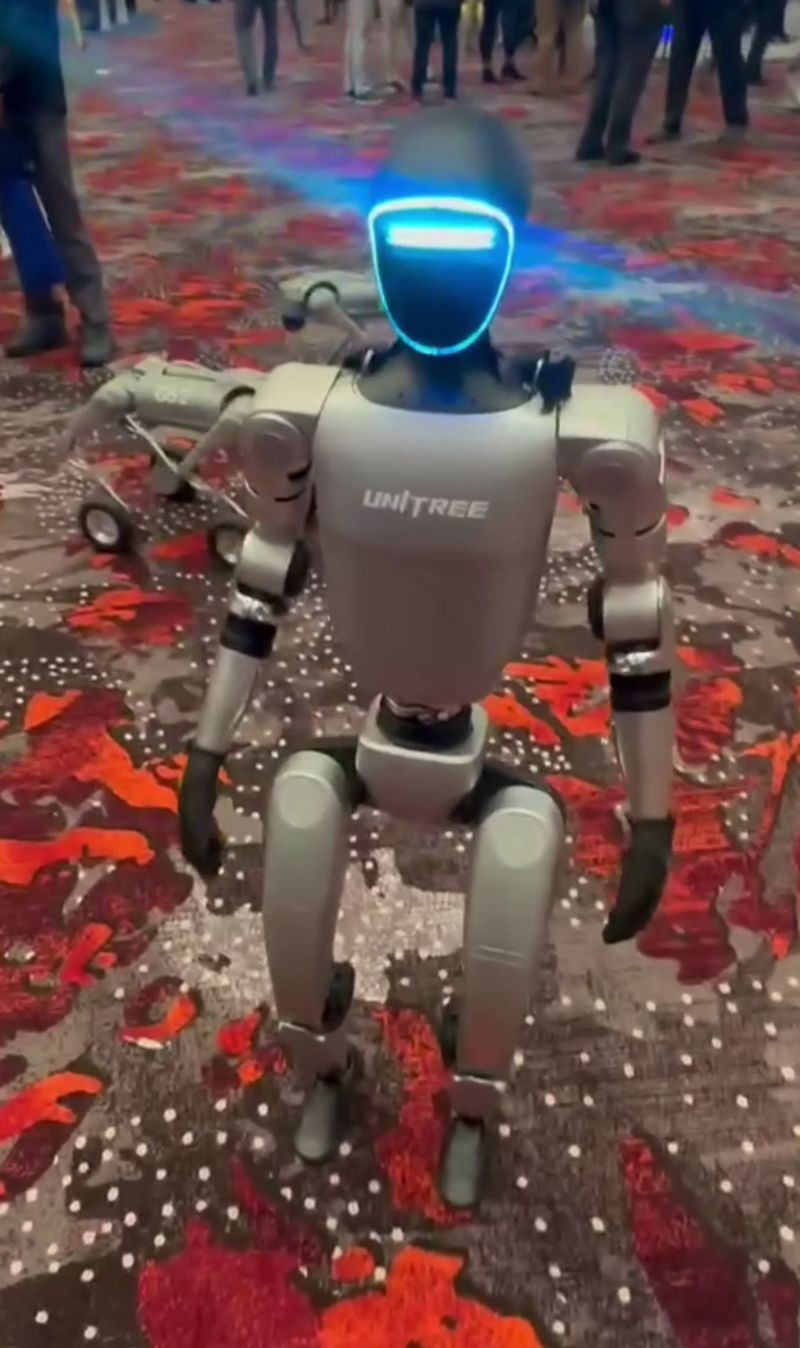
Unitree is the price-disruptor of the field, and the G1 is the cheapest full-size humanoid on sale: $13,500 direct from Unitree's own store — down from $16,000 at its May 2024 launch — or $17,990 via a US reseller. The G1 stands 132 cm, weighs about 35 kg, has 23 degrees of freedom (43 on the EDU version), lifts 2 kg per arm (3 kg on EDU) and runs about 2 hours. The EDU versions, $43,900–$73,900, are the programmable research robots; the base unit is demo-only — you cannot write code for it. The bigger H2, launched in April 2026, stands 182 cm, weighs about 70 kg, has 31 degrees of freedom, a 7 kg operational payload (21 kg peak), 360 N·m joint torque and 2,070 TOPS of compute, running about 3 hours — $29,900 in China, $40,900 internationally, $68,900 for the EDU version, with an H2 Plus at $100,000. The H2 performed at the 2026 Spring Festival Gala. Regulatory flags: the US Federal Communications Commission added foreign-produced advanced robotic devices to its Covered List on July 28, 2026, blocking new authorizations — the G1 was already authorized, so US imports and sales continue, but any future G1 hardware revision would need a fresh authorization it could not get. The Pentagon designated Unitree a Chinese military company on June 8, 2026, shutting it out of federal and defense procurement. Unitree opened commercial sales in Europe on July 22, 2026.
 Apptronik Apollo — the quiet industrial pilot
Apollo is the least flashy robot on this page and one of the most seriously deployed. The original Apollo stands 173 cm, weighs 72.6 kg, carries a 25 kg payload and runs 4 hours on a hot-swappable battery. Apollo 2, unveiled in June 2026, comes in bipedal and wheeled configurations. The pilots are industrial: Mercedes-Benz (its Berlin-Marienfelde Digital Factory Campus and Kecskemét, Hungary), GXO Logistics, and Jabil — which also manufactures the robot. Apptronik has partnered with Google DeepMind since December 2024, and a November 10, 2026 demonstration showed Apollo 2 sorting brackets on Mercedes lines with Gemini Robotics 2.5 at 96% success — though the denominator was not published. The company raised more than $935 million in its Series A (a $520 million extension in February 2026, at a valuation of about $5.3 billion). There is no public price; Apollo 3 is planned as the first commercial product. Flagged: the published specifications are from the original 2023 Apollo and have not been reconfirmed for Apollo 2.
 Agility Robotics Digit — the most commercially deployed humanoid
If one robot has earned the word "commercial," it is Digit. The fourth generation stands 175 cm, weighs about 63.5–65 kg, carries a 16 kg payload and runs up to 4 hours (after a 2025 battery upgrade). Amazon runs 75 units at its Spanaway, Washington fulfillment center (April 2026), where Digit has recycled totes since 2023. GXO Logistics has moved more than 100,000 totes with Digit at its Flowery Branch facility at about 98% on-task accuracy, under a multi-year commercial robots-as-a-service agreement — the industry's first. Schaeffler and Toyota Motor Manufacturing Canada are also customers. Agility's RoboFab in Salem, Oregon is the first purpose-built humanoid factory in the US, with capacity for up to 10,000 units a year. Price is reported, not published: about $250,000 to buy, or $2,000–$4,000 a month as a service. Digit 5, unveiled September 15, 2026, raises the payload to 23 kg, stands 180 cm, weighs 129 kg, reaches 7.2 feet, runs 90 minutes and charges in 9 — early access in the first half of 2027, general availability late 2027.
UBTECH Walker S2 — the Chinese factory workhorse
Walker S2 is the robot most people outside China have never heard of, and the one with the most factory customers. It stands about 176 cm, has 52 degrees of freedom, carries a 15 kg payload, rotates its waist ±162°, and swaps its own battery in 3 minutes for 24/7 operation. Mass production and first deliveries came in November 2025, at several hundred units, and the customer list spans BYD, Geely, FAW-Volkswagen, Audi FAW, BAIC, Foxconn, NIO, Zeekr, SF Express and Airbus, with reported orders over ¥1.4 billion — company-stated, not audited. There is no public price; sales are enterprise contracts only. Flagged: published weight figures conflict wildly, from 43 to 73 kg, so this page prints none. And the partner list is a mix of factory pilots, trials and announced partnerships — not uniformly verified at-scale production deployment.
Sanctuary AI Phoenix — the pivot from legs to software
Phoenix is the cautionary tale about what counts as a product. The Gen 8 platform, from January 2025, stands 170 cm, weighs about 70 kg, carries a 25 kg payload, and has hydraulic hands with 20–21 degrees of freedom and tactile sensing down to about 5 millinewtons, driven by Sanctuary's Carbon artificial intelligence (symbolic reasoning plus language models plus reinforcement learning). But Gen 8 is a wheeled upper-body platform — Sanctuary dropped bipedal legs as too frail for a strong torso — and it was never sold as a complete robot. Since June 2026, the commercial product is Carbon physical-AI software running on other makers' hardware. Phoenix is worth knowing about because its hands are among the most capable in the field, and because it shows the field's real shape: the software may matter more than the body.
EngineAI T800 — commercial in China, flagged heavily
The T800, launched December 2, 2025, stands 173 cm, weighs 75–85 kg depending on edition, has 25–46 degrees of freedom and 450 N·m peak joint torque. The price is the first thing to flag: there are two price lists, ¥180,000 (about $40,500) for the Basic edition up to ¥360,000 (about $80,800) for the Max — a roughly 52% export premium — and the widely quoted "$25,000" is a stale December 2025 currency conversion, not a price. Runtime is also flagged: 3–5 hours claimed, but the manual describes a 1.22 kWh battery good for about 2–3 hours. There is no US retail channel and no FCC authorization (the July 2026 Covered List bars new authorizations for Chinese-made humanoids). Mass production was claimed in May 2026 at 10,000-unit capacity, but there is no named customer deployment and no independent verification. The smaller PM01 (138–140 cm, about 40–44 kg, 24 degrees of freedom) is cheaper; note that the commonly cited ¥88,000 price belongs to the SE01, not the PM01.
 XPeng Iron — from carmaker to robot maker
XPeng, the Chinese electric-vehicle maker, is the car company furthest along in humanoids. Iron stands 178 cm, weighs 70 kg, has 76 body degrees of freedom plus 21 per hand, runs on three in-house Turing artificial intelligence chips, runs about 5 hours and carries a 20 kg payload. The production line was commissioned on September 8, 2026 — the first unit walked off the line autonomously, which XPeng calls a world first — with volume production targeted for the end of 2026, stores and campuses in early 2027, and external deliveries in 2027. No price has been announced. Flagged: the degree-of-freedom count conflicts between sources (some say 82 total, some about 200 including passive joints), the chip performance conflicts (up to 2,250 TOPS per some sources, 3,000 per others), and the 20 kg payload is an aggregator figure, not maker-published. The older specification (173 cm, 65 kg, 42 degrees of freedom) is superseded.
Noetix N2 — the affordable showpiece
The N2 is the smallest commercial humanoid on this page and the most honest about what it is: an agility showpiece for classrooms and demonstrations, not a manipulation or autonomy platform. It stands 118 cm (the production specification — sources conflict between 114 and 118 cm), weighs 30 kg, has 18 degrees of freedom, 150 N·m peak knee torque, runs up to 3.2–3.5 m/s and 1–2 hours on a quick-swap 48V battery. It costs ¥39,900 (about $5,500) in China, or $15,390–$15,416 via a US reseller — the base version has no software development kit (built-in modes only), while the $20,892 EDU version adds a Jetson Orin Nano Super chip and a full SDK. It ran the Beijing half-marathon and does continuous backflips. Noetix raised a Series B of about ¥1 billion in March 2026.
 NEURA Robotics 4NE1 — Europe's entry, still pre-order
NEURA Robotics of Metzingen, Germany is Europe's most prominent humanoid maker. The 4NE1 Gen 3.5 stands 180 cm, weighs 80 kg, carries 10–20 kg on its arms (up to 100 kg in leg-supported configurations, per NEURA's datasheets), runs 6–8 hours on hot-swappable batteries and is priced at €98,000 for 1–19 units or €60,000 for 20 or more, with a €100 refundable reservation fee and availability promised by the end of 2026; the smaller 4NE1 Mini costs €19,999. The Gen 4, unveiled October 22, 2026 at the opening of the TUM RoboGym in Munich — a €17 million, 2,300-square-meter training center built with the Technical University of Munich — is slimmer, with a textile skin, local limb reflexes and NEURA's Neuron artificial intelligence running locally, without a cloud connection. Flagged: NEURA has announced no price, delivery date or volumes for Gen 4, and there are no customer deployments, pilots or shipped units to point to. One third-party report puts the Gen 4 weight at about 64 kg, against NEURA's own 80 kg listing — this page uses the manufacturer's figure.
Also on the radar: the directory of tracked companies lists ten flagships with source-backed commercial availability, including AgiBot A3, Booster K1, Dexmate Vega, MagicBot Gen1 and Robosen K1 Pro — mostly Chinese, mostly aimed at factories and research, and none with a US consumer channel. The field is far wider than the robots above; the ones above are the ones with verifiable deployments, prices or both.
Where they work today
Warehouses and factories. This is the whole real market. Digit moves totes at Amazon and GXO; Figure sequences parts at BMW; Apollo works Mercedes lines; Atlas is heading to Hyundai's Georgia plant; Walker S2 is in Chinese car factories. The jobs are the same in every case: repetitive, heavy, predictable — moving a box from here to there, thousands of times a day, in a space designed around the robot.
Homes. Only one robot on this page is aimed at the home — 1X's NEO — and it is not yet in any customer's home. Everything else is a factory or laboratory machine. A humanoid that can reliably tidy a living room, load a dishwasher or fold laundry does not exist yet, and no company on this page claims otherwise in its fine print.
Research and education. The G1 and the N2 are the classroom robots: cheap enough for a university lab, programmable enough (in their EDU versions) to teach the next generation of roboticists. Most of the field's real learning is happening here, not on factory floors.
Safety and jobs — the honest questions
Safety. A humanoid is a 30–130 kg machine with powerful motors, moving at human height, next to people. There is no published safety standard written specifically for humanoids yet — the industrial-robot standards (ISO 10218) and the collaborative-robot guidance (ISO/TS 15066) were written for robot arms bolted to a floor, not for machines that walk around. What exists instead is a patchwork: emergency-stop buttons, speed limits near people, cages and zones on factory floors, and teleoperation supervisors watching the robot's cameras. The home question is harder: a robot that can open doors and pick things up is also a robot with cameras in your house, and 1X's answer — owner-approved areas, no-go zones, and approve-or-deny for each remote session — is the most developed privacy model in the field. It is also an admission: the robot still needs a remote human.
Jobs. The work humanoids are taking first is the work people least want: moving totes, sequencing parts, carrying boxes. That is also the work that employs the most people in warehouses. The honest frame is that the robots are not replacing warehouse workers yet — they are working alongside them, at a scale of dozens of units per site, doing one task each. The new jobs are robot operators, fleet supervisors and maintenance technicians. What happens when the fleets grow from dozens to thousands is the question nobody can answer yet, and it is the one worth watching.
What to watch
- CES 2027 (January, Las Vegas): the natural milestone for the field — robotics is one of the show's featured areas, and several makers are expected to show new hardware. DTN's CES watch covers robotics.
- Figure and BMW: whether the 40-unit Spartanburg pilot expands to more halls, more plants, or a second customer.
- Atlas customers from early 2027: the first buyers beyond Hyundai and Google DeepMind will show whether Atlas is a product or a flagship.
- Tesla's consumer sale date: the single most-watched date in the field — Optimus at $20,000–$30,000 would change the market overnight, if it ever ships.
- Digit 5: early access in the first half of 2027, general availability late 2027 — the first upgrade of the most-deployed humanoid.
- XPeng's external deliveries in 2027: the first humanoid from a carmaker sold to outside customers.
- NEO's first deliveries: the first home humanoid in a real home, and the first test of whether teleoperation plus a subscription is a product people want.
Before you decide
- If you are a researcher or educator: the Unitree G1 EDU or the Noetix N2 EDU are the only honest buys — programmable, documented, and priced in the open. The base G1 cannot run your code.
- If you are an enterprise buyer: you are buying a pilot agreement, not a product — expect a contract, a deployment team, and a price you negotiate, not a checkout page.
- If you are a consumer: the only home pre-order is NEO at $20,000 plus $499 a month, and it is not autonomous yet. Do not buy a humanoid for general housework — none exists.
- If you are buying Chinese-made: check the FCC Covered List (July 2026) and the Pentagon's Chinese military company designations — they decide what can be imported, authorized and sold to US government buyers.
- Check the stage, not the video. A backflip is a stunt. A deployment is a product. Ask for the customer, the number of units, and the hours worked.
What "best for" means
There is no best humanoid robot — there is a best robot for a specific job, and most jobs have exactly one credible option.
- Best for warehouse work today: Agility Digit — the only humanoid with triple-digit commercial deployments and a service model.
- Best for factory pilots: Figure 03, UBTECH Walker S2 and Apptronik Apollo — each with real units at real customers.
- Best for research and education: Unitree G1 EDU or Noetix N2 EDU — the only programmable robots with published prices.
- Best for the home, eventually: 1X NEO — the only home-focused robot, still in pre-order and still teleoperated.
- Best for capability: Boston Dynamics Atlas — the most capable hardware, and the furthest from a price tag.
- Best for getting started cheaply: Unitree G1 base at $13,500 — a demo robot, not a research platform, but the cheapest way to own a humanoid.
Sources & further reading
Figures checked November 12, 2026, from the makers' own pages and announcements — Tesla (Optimus), Figure AI (Figure 03 and the BMW Spartanburg deployment, BMW announcement June 2026), Boston Dynamics (electric Atlas, CES January 2026; GR3 hand, October 2026), 1X Technologies (NEO pre-order page), Unitree (G1 and H2 store pages), Apptronik (Apollo and Apollo 2), Agility Robotics (Digit deployments at Amazon and GXO), UBTECH (Walker S2), Sanctuary AI (Phoenix Gen 8 and the Carbon pivot), EngineAI (T800), XPeng (Iron production line, September 2026), Noetix (N2), NEURA Robotics (4NE1 Gen 3.5 and Gen 4, TUM RoboGym) — plus the humanoid.guide manufacturer directory, RoboZaps' humanoid-robot-companies directory (57 companies tracked, 10 flagships commercially available) and The Robotic Life's stage definitions; the FCC Covered List determination (July 28, 2026) and the Pentagon's Chinese military company designation of Unitree (June 8, 2026); the Wall Street Journal's NEO hands-on testing and subscription reporting. Tesla, Figure, Boston Dynamics, 1X, Unitree, Apptronik, Agility Robotics, UBTECH, Sanctuary AI, EngineAI, XPeng, Noetix and NEURA Robotics are trademarks of their respective owners; logos are shown for identification only. Figure, UBTECH, Sanctuary AI, EngineAI and Noetix appear as text only — no usable logo file was available. Photos: Tesla Optimus at a Tesla showroom, November 2025 (Sikander, Wikimedia Commons, CC BY-SA 4.0); electric Atlas at Hyundai Motorstudio Goyang, July 2026 (Damian B Oh, Wikimedia Commons, CC BY-SA 4.0); Unitree G1 at a trade show, November 2024 (Wikimedia Commons, CC0). The hero image is an AI-generated abstract illustration, not a photograph of any real robot.